An analysis with recommendations
Key takeaways
- Diagnosis: the Founder Trap is the primary internal bottleneck to scaling social enterprises in India, where the founder’s initial success attributes (fierce conviction and personal control) actively impede institutional growth.
- The paradox: the very qualities that successfully build a venture are the same attributes that impede sustainable scaling.
- The new standard: sustainable growth requires treating founder evolution as a prerequisite for scale, shifting the enterprise from a model of “personal heroism” to one of institutional resilience.
- Critical questions: long-term feasibility hinges on answering two strategic questions:
- Do you know yourself (in a precise operational sense)?
- What does success look like when you are no longer essential to it?
- Shared accountability: breaking the Founder Trap requires shared accountability from all stakeholders.
The funding paradox: why capital alone isn’t enough
The conversation around social enterprise used to be simple: the problem was a lack of capital to support ventures focused on serving low-income markets effectively. That narrative has officially shifted. Between 2010 and 2016, India saw roughly $5.2 billion in cumulative impact investments (McKinsey). In the subsequent decade, with a surge in climate tech and agriculture, that cumulative figure has reached about $35 billion (Impact Investors Council).
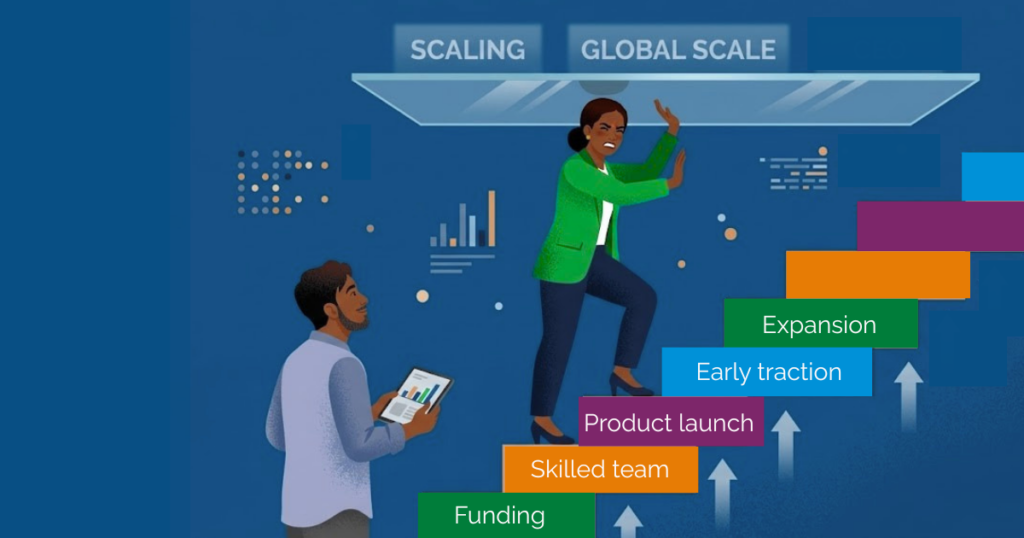
Despite this welcome influx of funding, a persistent pattern continues to trouble the sector. At Women on Wings, we have seen enterprises successfully raise funding, hire skilled teams, and expand their operational footprint. But too often, after this initial success, they hit an invisible ceiling that no amount of new capital appears capable of lifting.
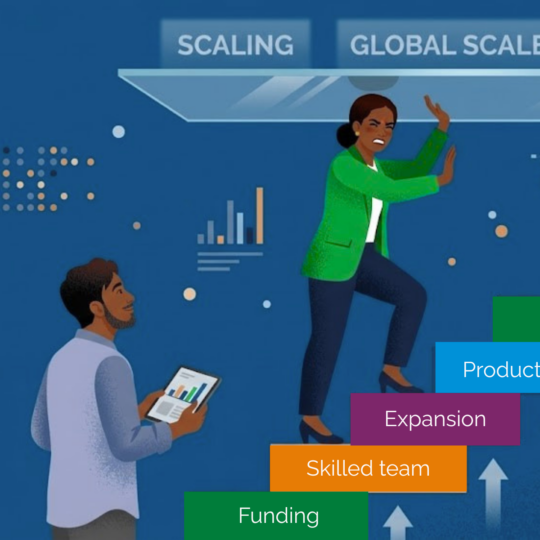
After initial success, founders hit an invisible ceiling
The Founder Trap: a deeper diagnosis
Conventional explanations for this stagnation point to market linkages or supply chain issues. We believe the diagnosis is incomplete. Many high-potential social enterprises stall because the organization never evolves beyond the founder. We call this the Founder Trap.
The paradox is simple but rarely discussed. The very qualities that build a successful venture, fierce conviction and personal control, are the same attributes that actively impede sustainable scaling. Early-stage success rewards this centralizing, “heroic” model of leadership.
From personal control to distributed authority
A genuinely scaled institution demands something fundamentally different. It requires distributed authority, stronger governance, and repeatable systems. Many founders recognize this shift intellectually. Far fewer redesign their own role accordingly.
Instead, organizations evolve around the founder, not beyond them. Senior managers are hired but key decisions remain centralized. Boards exist, but meaningful oversight is rare. Processes get documented, yet teams still wait for the founder’s approval before acting. On paper, governance matures. In practice, authority remains personal. The enterprise grows in size but not in institutional resilience.
This issue is critical for India’s economy, especially as the government prioritizes MSME growth and allocates increased funds for rural development in the latest Union Budget. If we are serious about the sector’s long-term impact, we must address the internal limitations that prevent growth.
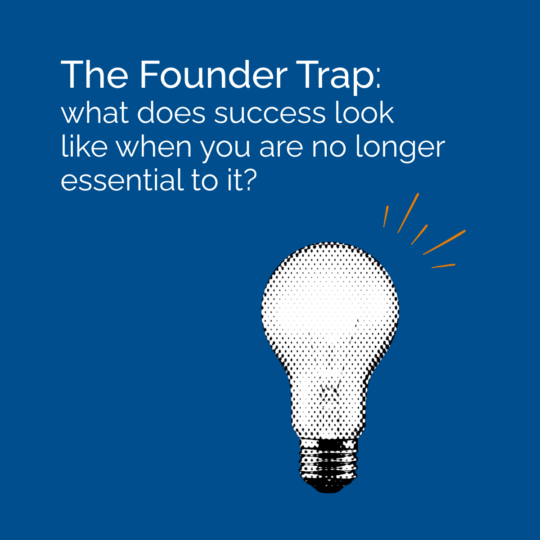
The question a founder needs to ask themself
The critical gap: asking the right questions
In our view, the burden of responsibility is on the founder, but accountability must be shared by all key stakeholders. We evaluate social enterprises against high institutional standards: growth strategy, financial foresight, functional capability, governance structure. Investors actively underwrite growth based on projections, and boards demand institutional resilience. Government agencies measure tangible outputs: the number of producers reached, products sold, jobs or income created.
And yet, few investors or board members ask the two profound questions that determine long-term feasibility.
The first question is: Do you know yourself? Not in a philosophical sense, in a precise operational one. What are your actual strengths? Where does your energy deplete? Which decisions genuinely require you, and which ones have you simply never let go of? Our experience suggests founders who cannot answer this accurately become the invisible ceiling. They hire well but cannot delegate; they remain the final filter on every decision.
The second question is harder: what does success look like when you are no longer essential to it?
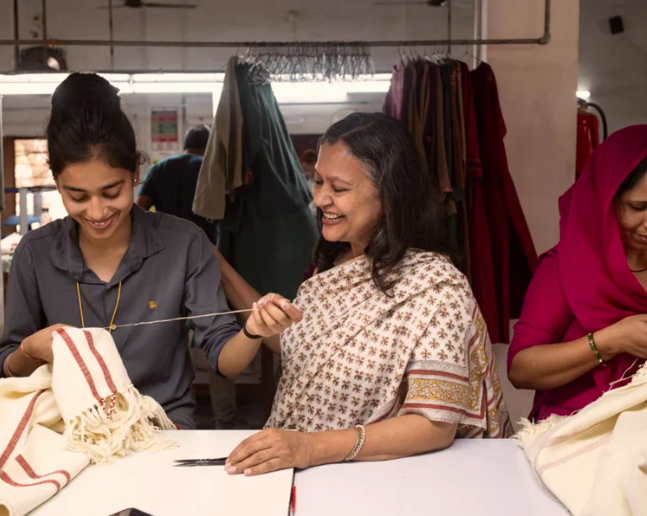
Rangsutra Founder Sumita Ghose visiting with artisans.
Case in point: Rangsutra and the path to organizational strength
Take Rangsutra, a social enterprise textiles partner we admire. Founder Sumita Ghose answered this well. She recognized her advantage lay in safeguarding her organization’s mission and community relationships, not managing daily operations.
As Rangsutra expanded its rural producers and market reach, Sumita deliberately stepped back from operational control, hired a CEO, and built professional leadership across core functions. The result was not diminished influence. It was institutional strength.
India’s social enterprises are now essential providers of livelihoods and vital services to rural communities. Their leadership resilience is a pressing matter of public interest and system stability.
A must have for scale.
Proposing a new standard: founder evolution for scale
So, what must change? We propose a new standard: treat founder evolution as a prerequisite for scale.
- Investors must treat leadership depth as seriously as financial performance. Funding milestones should be tied to organizational structure clarity and leadership development.
- Government agencies should require succession planning in long-term partnerships.
- Corporates deploying CSR capital must invest in strengthening boards and management pipelines, not just program expansion.
- And founders must fundamentally redefine the meaning of their legacy.
The challenge is clear: long-term sustainable scale demands a shift from a model of personal founder heroism to institutional resilience and shared accountability.
The co- authors: Supriya Kapoor and the Women on Wings team.
Partner with Women on Wings to overcome the Founder Trap and economically empower more women in rural India with sustainable work and income. Reach out today.